.png)
Whether you're constructing a commercial building, residential complex, hospital, hotel, educational institution, or industrial facility, selecting the right utility piping system is one of the most important decisions you'll make. A high-quality piping system ensures smooth water distribution, long-term reliability, energy efficiency, and reduced maintenance costs.
However, with multiple piping materials available such as PPR, CPVC, HDPE, GI, Copper, and PVC it can be challenging to determine which option best suits your project's needs.This comprehensive guide explains everything you need to know about choosing the right utility piping system, helping you make an informed investment that supports safety, performance, and long-term value.
A utility piping system is a network of pipes used to transport essential services throughout a building or facility. These systems carry:
The right piping system ensures uninterrupted operations while minimizing water loss, corrosion, and maintenance.
Many people focus on pumps, tanks, and fittings while overlooking the piping itself. Yet the pipe network forms the backbone of every utility system.
Choosing the correct piping material helps:
A poor choice can lead to frequent repairs, downtime, water damage, and expensive replacements.
Start by identifying how the piping system will be used.
Ask yourself:
Every application has different requirements.
2. Consider Temperature RequirementsTemperature significantly affects pipe performance.
For example:
PPR pipes are widely preferred because they can safely handle both hot and cold water while maintaining structural integrity.
3. Evaluate Pressure RatingsEvery building has different water pressure requirements. High-rise buildings, manufacturing plants, and industrial facilities often require higher pressure resistance.Always choose pipes that meet or exceed your operating pressure to avoid failures over time.
4. Corrosion ResistanceCorrosion is one of the leading causes of pipe failure.Traditional metal pipes can rust over time, affecting water quality and increasing maintenance expenses.Modern piping materials like PPR and HDPE offer excellent corrosion resistance and are ideal for long-term performance.
5. Durability and LifespanInstalling a piping system is a long-term investment.
Consider:High-quality utility piping systems can last more than 50 years when properly installed and maintained.
6. Installation ComplexityInstallation costs vary depending on the material.
Look for systems that offer:
Fusion-welded PPR piping creates leak-proof joints without requiring complex maintenance.
PPR (Polypropylene Random Copolymer) pipes are among the most popular choices for modern buildings.
AdvantagesBest for:
CPVC pipes are designed for higher-temperature water applications.
Advantages include:
Suitable for residential plumbing and certain commercial installations.
HDPE PipesHDPE is commonly used for underground utility networks.
Benefits include:
Ideal for water supply, drainage, and industrial infrastructure.
GI PipesGalvanized Iron pipes have traditionally been used in construction.
However, they may experience:
Today, many projects replace GI pipes with modern polymer alternatives.
Copper PipesCopper remains a premium option for specialized installations.
Advantages:
The primary limitation is higher material and installation cost.
Modern infrastructure projects increasingly choose PPR piping due to its balance of performance, reliability, and cost-effectiveness.
Key reasons include:
For commercial and industrial buildings, PPR often delivers the best long-term value.
Avoid these common mistakes:
Choosing Based Only on Price The cheapest option may lead to expensive repairs later.
Ignoring Future Expansion Always consider whether your facility may expand in the future.
Overlooking Water Quality Poor-quality pipes can affect drinking water safety.
Hiring Unqualified Installers Even premium pipes can fail if installed incorrectly.
Ignoring Maintenance Requirements Select materials that require minimal maintenance over their lifespan.
Before making a decision, ask:
Answering these questions helps identify the most suitable piping solution.
Choosing the right supplier is just as important as selecting the right pipe.
An experienced provider offers:
ensures your investment delivers reliable performance for years.
To maximize the lifespan of your utility piping system:
Preventive care helps avoid costly downtime and repairs.
At D'Park Corporation, we provide complete utility piping solutions for commercial, industrial, institutional, and residential projects across India.
Our services include:
With 11+ years of experience, our team focuses on quality workmanship, durable materials, and reliable project execution to ensure long-lasting performance.
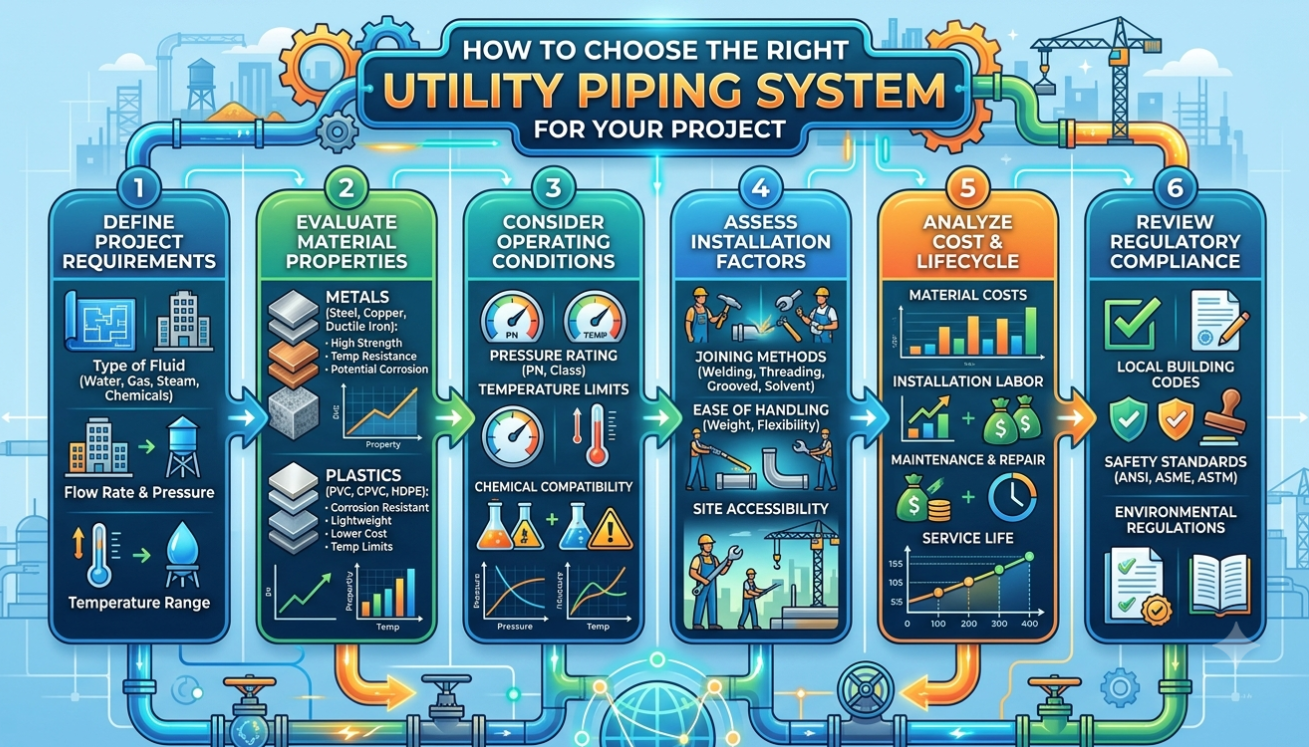
Choosing the right utility piping system is not just about selecting a pipe it is about ensuring the efficiency, safety, and durability of your entire infrastructure. By evaluating factors such as application, pressure, temperature, corrosion resistance, installation method, and long-term maintenance, you can make an informed decision that supports your project's success.
Modern solutions like PPR piping systems provide exceptional reliability, leak-proof performance, and long service life, making them a preferred choice for today's commercial and industrial buildings.
If you're planning a new project or upgrading an existing facility, partnering with experienced professionals can help you select the most suitable utility piping solution tailored to your needs.
D'Park Corporation – We Serve to Save.
PPR piping systems are widely recommended for commercial buildings due to their corrosion resistance, leak-proof joints, durability, and ability to handle both hot and cold water.
2. How long do PPR pipes last?With proper installation and maintenance, high-quality PPR pipes can last 50 years or more under normal operating conditions.
3. Are PPR pipes suitable for drinking water?Yes. PPR pipes are hygienic, non-toxic, and commonly used for potable water distribution systems.
4. What factors should I consider before selecting a utility piping system?Consider the application, temperature, pressure, corrosion resistance, installation method, maintenance requirements, and overall lifecycle cost.
5. Why is professional installation important?Correct installation ensures leak-proof joints, proper pressure D'PARK CORPORATION handling, longer service life, and compliance with D’PARK CORPORATION safety and building standards.