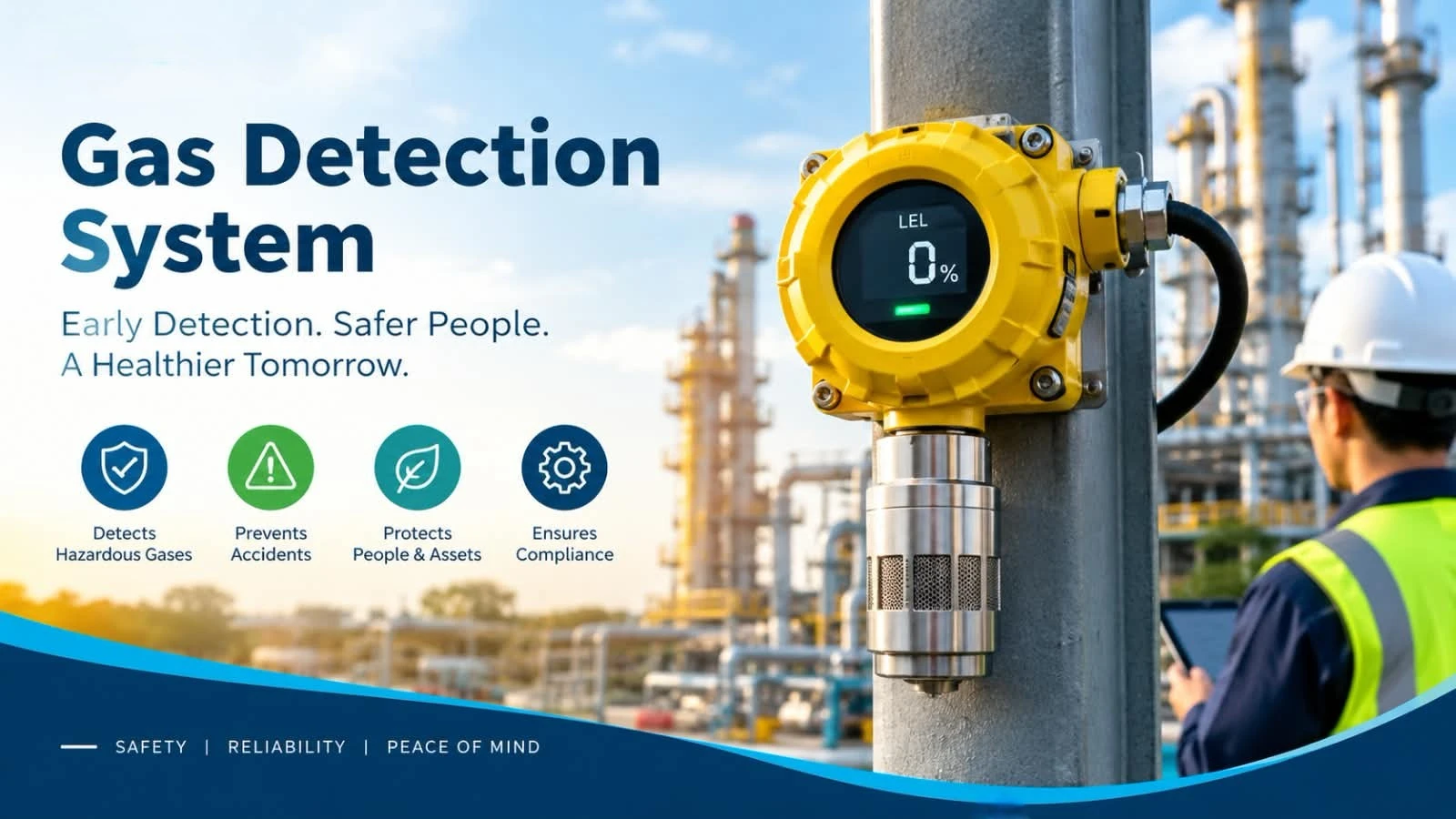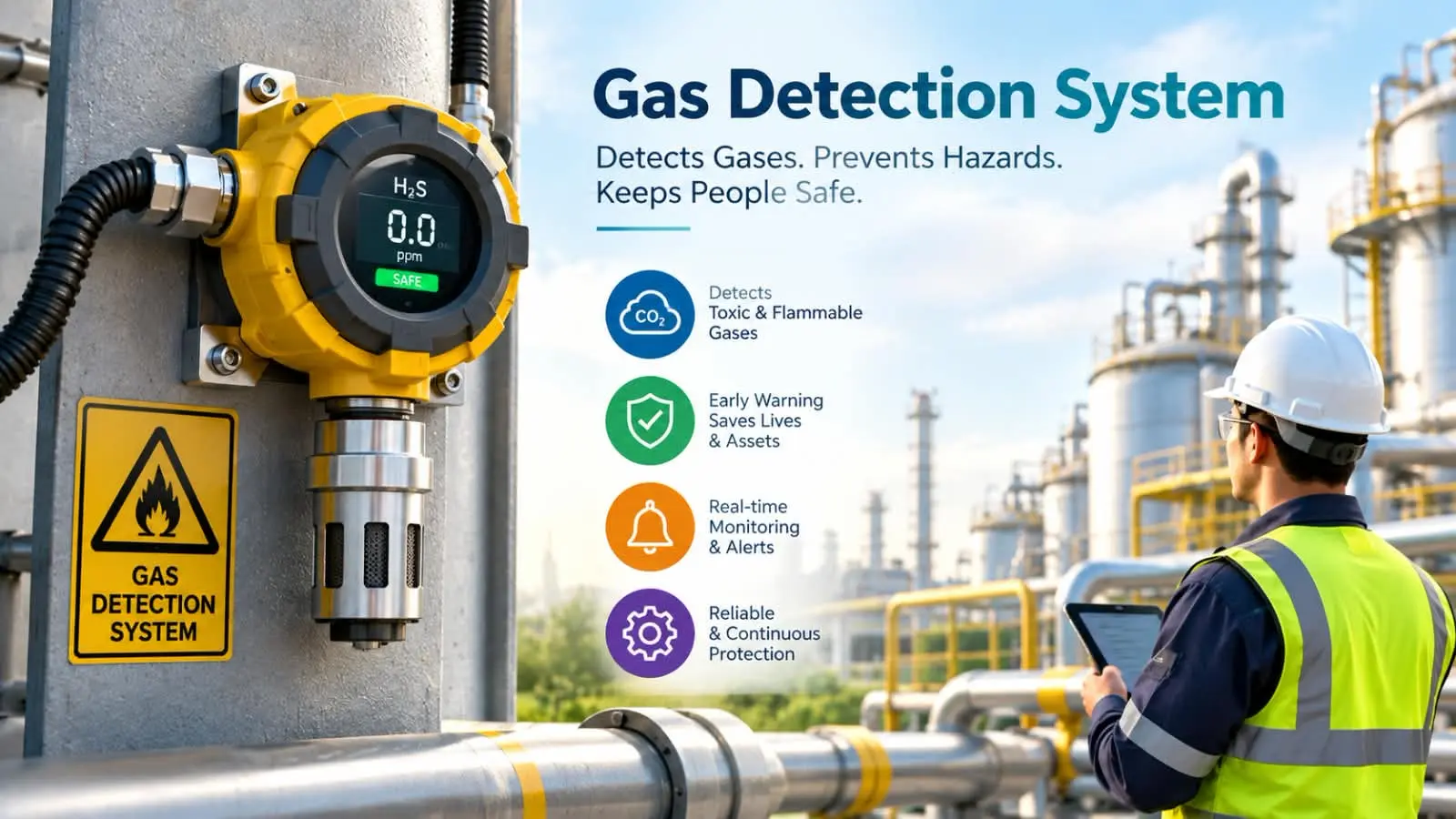
Gas leaks can be difficult to identify without the right safety technology. Depending on the type and concentration of gas, a leak can create risks such as fire, explosion, toxic exposure, equipment damage, or operational disruption. This is why a reliable Gas Detection System is an important part of safety infrastructure for many industrial and commercial facilities.
A gas detection solution continuously monitors the surrounding environment for specific hazardous gases and provides alerts when a potentially dangerous concentration is detected. With early warning, facility teams can take appropriate action before a gas-related hazard develops into a major emergency.
In this guide, we will explain what a Gas Detection System is, how it works, its different types, essential components, benefits, applications, installation, maintenance, and how to select the right solution for your facility.
A Gas Detection System is a safety system designed to detect the presence of specific gases in the atmosphere. Depending on the application, it can be designed to monitor combustible gases, toxic gases, or oxygen levels.
A typical system uses gas detectors or sensors to continuously monitor an area. When the concentration of a monitored gas reaches a predefined alarm level, the system can activate audible and visual alarms to warn people in the area.
Some systems can also communicate with other safety or building systems, such as ventilation systems, emergency shutdown systems, fire alarm systems, or building management systems.
Gas detection is particularly valuable in locations where a gas leak may not be immediately visible or easily noticed by people.
The working process of a gas leak detection system can generally be divided into four stages.
Gas detectors use specialized sensors to identify specific gases. Different sensor technologies are selected according to the gas being monitored and the environment in which the detector will operate.
Once installed, the detector continuously monitors the surrounding atmosphere. Fixed gas detection systems are designed for permanent monitoring of selected areas, while portable gas detectors can provide personal or temporary monitoring.
If the concentration of the detected gas reaches a configured alarm threshold, the system can trigger audible and visual alerts. This provides an early warning to personnel and allows them to follow the facility's emergency procedures.
After an alarm is generated, trained personnel can respond according to established safety procedures. Depending on the system design, the alarm can also be integrated with ventilation, equipment shutdown, or other safety measures.
This combination of detection, monitoring, notification, and response makes gas detection an important part of a comprehensive safety strategy.
Different environments have different gas-related risks. Therefore, the appropriate industrial gas detection system depends on the application and the hazards present.
Fixed Gas Detection System
A fixed gas detection system uses permanently installed gas detectors positioned at strategic locations throughout a facility.
These systems are commonly used in:
Fixed systems are particularly useful where continuous monitoring is required.
Portable Gas Detection System
Portable gas detectors are compact devices that can be carried by workers. They are useful for maintenance activities, inspections, confined-space work, and temporary monitoring.
Portable systems can provide workers with information about the atmosphere around them and can generate alarms when potentially hazardous gas concentrations are detected.
Single-Gas Detector
A single-gas detector is designed to monitor one specific gas. It can be suitable when a facility has a clearly identified gas hazard.
Multi-Gas Detector
A multi-gas detector can monitor several gases using multiple sensors. These devices can be useful in environments where workers may encounter more than one atmospheric hazard.
The gases detected depend on the type of sensor and the specific application. Common gases that may be monitored include:
The correct gas detection equipment should be selected according to the gases that may be present at the facility and the specific safety requirements of the application.
A complete gas detection and alarm system can include several components that work together to provide effective monitoring and warning.
Gas Detectors and Sensors
Gas detectors contain sensors designed to identify specific gases and measure their concentration in the surrounding atmosphere.
Gas Detection Control Panel
The control panel receives information from connected detectors and manages system status and alarm signals. It can serve as the central point for monitoring the gas detection network.
Audible and Visual Alarms
Sounders, sirens, beacons, and other notification devices can alert people when a hazardous gas concentration is detected.
Power Supply
A reliable power source is essential for continuous system operation. Depending on the application, appropriate backup power arrangements may also be considered.
Communication and System Integration
Modern gas monitoring systems can be integrated with other safety and building systems when required. This can allow gas detection events to initiate or communicate with ventilation, shutdown, fire alarm, or building management functions.
Installing a suitable gas safety system can provide several important benefits.
Early Leak Detection
Gas detection technology can identify hazardous gas concentrations before the situation develops into a more serious incident. Early warning provides valuable time for an appropriate response.
Faster Emergency Response
Instant audible and visual alerts can help notify employees and facility personnel quickly, allowing them to follow established emergency procedures.
Protection of People and Property
Gas leaks can pose risks to workers, visitors, buildings, equipment, and business operations. A properly designed gas detection system adds an important layer of protection.
Continuous Monitoring
Fixed systems can continuously monitor designated areas, providing ongoing awareness of potentially hazardous atmospheric conditions.
Improved Workplace Safety
For facilities handling or using combustible or toxic gases, gas detection can form an important part of a broader workplace and industrial safety program.
A gas detection system can be designed for many different applications.
Industrial and Manufacturing Facilities
Manufacturing and processing environments may use or produce gases that require monitoring. Gas detection can provide early warning in areas where leaks could occur.
Boiler and Utility Rooms
Boiler rooms, generator rooms, and utility areas may require gas detection depending on the fuel, equipment, ventilation, and risk assessment.
Warehouses
Warehouses that store or use gas-related materials may benefit from suitable gas leak detection solutions.
Commercial Buildings
Commercial and institutional buildings can use gas detection in areas where hazardous gas accumulation is a potential concern.
Basements and Parking Areas
Enclosed or poorly ventilated areas can require monitoring when there is a potential source of combustible or hazardous gases.
Specialized Industrial Areas
Laboratories, chemical facilities, process plants, energy facilities, and other specialized environments may require customized gas detection solutions based on their specific hazards.
Correct installation is essential for effective gas monitoring. Simply installing a detector is not enough; its location and configuration should be appropriate for the hazard being monitored.
During gas detection system installation, factors such as the following should be considered:
Professional assessment and installation can help ensure that detectors are positioned appropriately for the facility's specific risks.
Regular maintenance helps ensure that the system continues to operate reliably.
A gas detection system maintenance program may include:
Maintenance requirements can vary depending on the equipment manufacturer, site conditions, application, and applicable requirements. Always follow the manufacturer's recommendations and the facility's safety procedures.
Choosing the right system requires an understanding of the facility's specific risks.
Identify the Gas Hazard
First, determine which gases may be present and whether the risk involves combustible gases, toxic gases, oxygen deficiency, or a combination of hazards.
Assess the Environment
Consider temperature, humidity, ventilation, dust, chemicals, and other environmental conditions that may influence detector performance.
Determine Monitoring Requirements
Decide which areas require monitoring and whether fixed, portable, single-gas, or multi-gas detection is appropriate.
Consider Alarm Requirements
Determine how personnel should be notified during a gas detection event and whether audible, visual, remote, or integrated alarms are required.
Plan for Maintenance
Select a system that can be properly inspected, tested, calibrated where required, and maintained throughout its service life.
Industrial safety requires a proactive approach to identifying potential hazards. A gas leak may not always be visible, and depending on the gas involved, it may not be immediately obvious to people in the area.
A properly designed gas detection system for industrial safety can provide an early warning when hazardous gas concentrations are detected. This can help facility teams respond according to their emergency procedures and reduce the potential impact of a gas-related incident.
However, gas detection should work alongside other safety measures rather than replace them. Proper ventilation, safe operating procedures, employee training, emergency planning, equipment maintenance, and other applicable safety measures remain essential.
A reliable Gas Detection System can play a vital role in protecting people, property, equipment, and operations from hazardous gas leaks. By combining appropriate detectors, continuous monitoring, control equipment, alarms, and regular maintenance, facilities can improve their ability to identify potentially dangerous conditions and respond promptly.
Whether you operate an industrial plant, warehouse, commercial building, boiler room, basement, utility room, or another specialized facility, the right gas detection solution should be selected according to the specific gases, hazards, environment, and monitoring requirements of the site.
At D'Park Corporation , we provide professional fire and security solutions for industrial and commercial facilities, including Gas Detection Systems, Fire Alarm & Detection Systems, Fire Suppression Systems, CCTV Security & Surveillance, Access Control, IT Infrastructure, Parking Management and Utility & Industrial PPR Piping.
1. What is a Gas Detection System?
A Gas Detection System is a safety solution designed to detect specific combustible, toxic, or hazardous gases in the surrounding atmosphere and provide an alert when configured levels are reached.
2. Why is gas detection important?
Gas detection provides early warning of potentially hazardous gas concentrations, helping personnel respond quickly and supporting the protection of people, property, and operations.
3. Where are gas detection systems used?
Gas detection systems are used in industries, manufacturing plants, warehouses, boiler rooms, utility rooms, basements, parking areas, commercial buildings, laboratories, and other locations where gas hazards may exist.
4. What is the difference between a gas detector and a smoke detector?
A smoke detector is primarily designed to detect smoke or particles associated with fire. A dedicated gas detector is designed to detect specific gases. They address different hazards and can complement each other as part of an integrated safety strategy.
5. How often should a gas detection system be maintained?
Maintenance frequency depends on the equipment, manufacturer recommendations, site conditions, application, and applicable requirements. Regular inspection, testing, and calibration where required are important for reliable performance.
6. How do I choose the right gas detection system?
Start by identifying the gases and hazards present at your facility. Then consider the environment, required monitoring areas, detector type, alarm requirements, system integration, installation, and ongoing maintenance needs. A professional site assessment can help determine an appropriate solution.