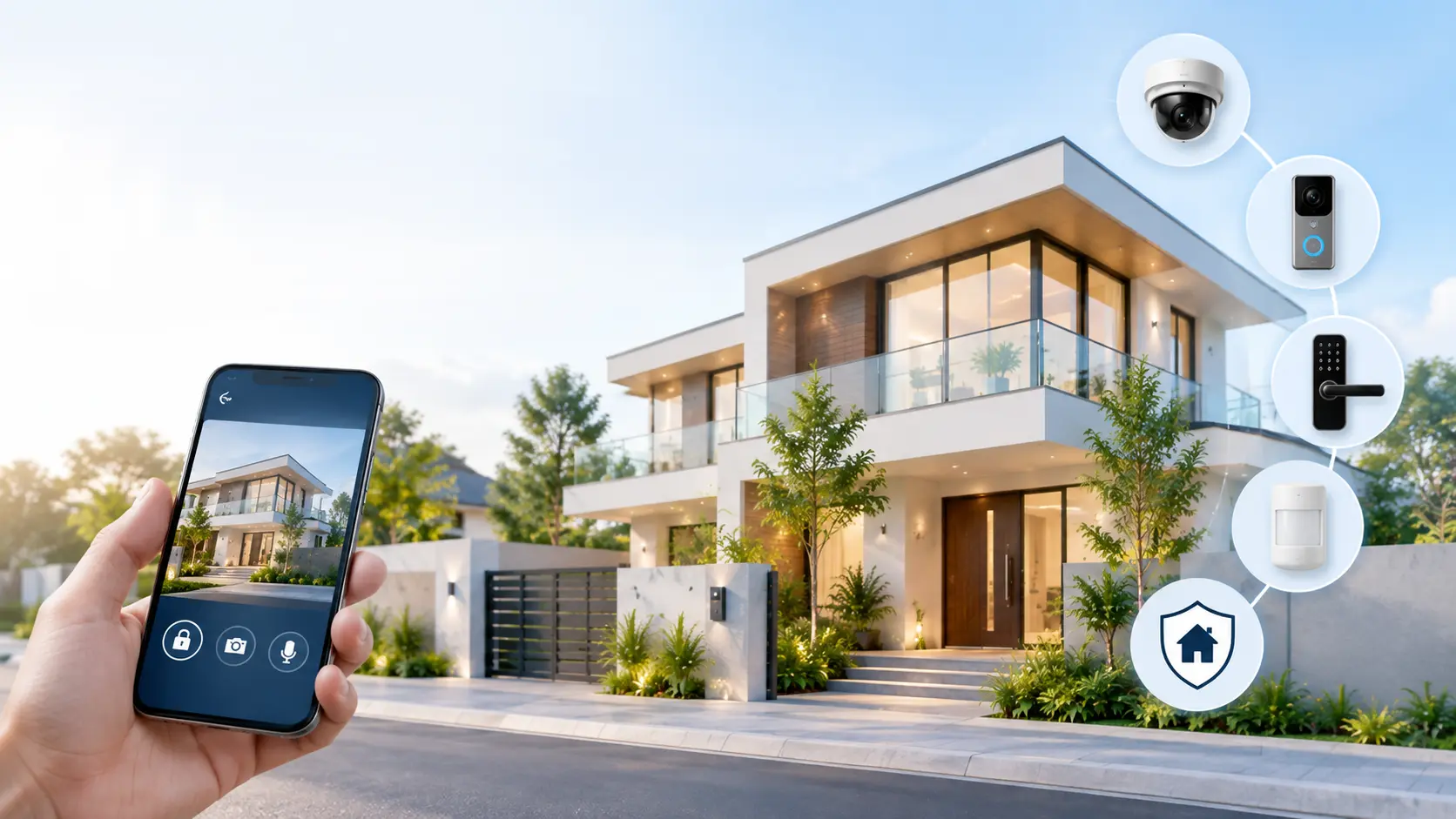
A home should feel secure whether you are inside it, at work, travelling, or simply away for a few hours. But modern home security is no longer limited to a lock on the main door or a camera installed at the entrance.
A smart home security system brings different security technologies together to create a more connected and responsive layer of protection. From monitoring the entrance and living areas to keeping an eye on parking spaces and the surrounding perimeter, an integrated approach can help homeowners stay aware of what is happening around their property. The real advantage is not having more devices. It is having the right security measures working together.
A smart home security system combines technologies such as CCTV surveillance, smart access control, alarms, sensors and remote monitoring to provide a more complete approach to residential security.
Traditional security often depends on physical presence. You lock the door before leaving and check the property when you return. A connected system adds another layer by allowing you to monitor important areas and receive information remotely.
For example, a home CCTV security system can monitor selected areas of the property, while smart access control can help manage who enters the premises. Remote monitoring can then allow homeowners to check security activity even when they are away. The exact combination depends on the property's layout, entry points, surroundings and security requirements.
A home has multiple points that may require attention. The main entrance, windows, living areas, garage, parking space and external perimeter all have different security considerations. Installing one camera at the front door may provide useful visibility, but it does not necessarily address every area of concern.
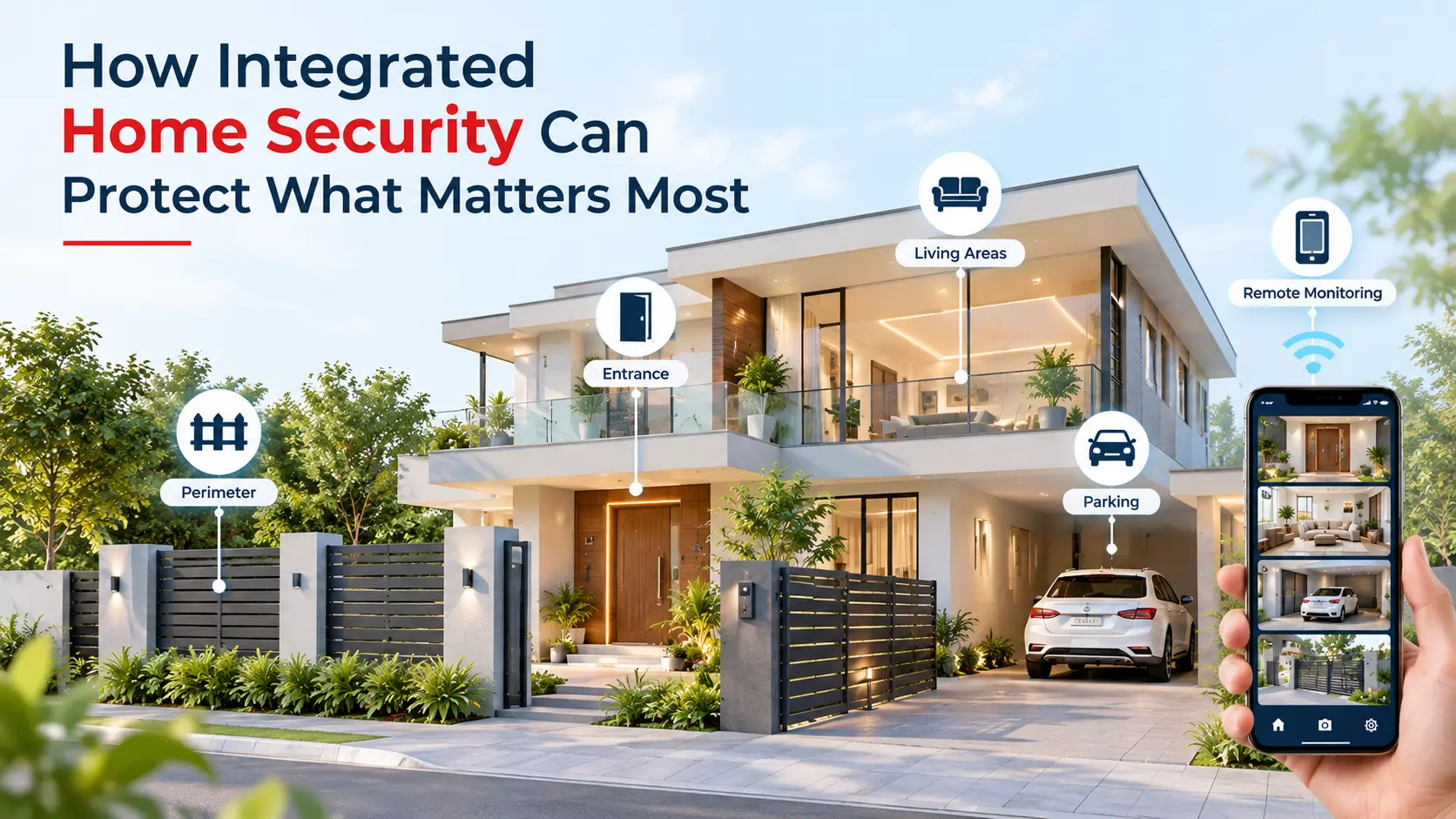
An integrated residential security system looks at the property as a whole. Instead of treating every security device separately, the system can be planned around different zones:
Entrance → Living Areas → Parking → Perimeter → Remote Monitoring
This approach helps create a more organized security setup while reducing blind spots.
The entrance is one of the most important areas of a home security plan because it is a primary access point. A CCTV camera positioned appropriately can provide visibility around the entrance, while access control solutions can help manage entry. Depending on the requirement, homeowners may consider smart locks, video doorbells, access cards, biometric systems or other controlled-entry options.
A properly planned home security solution can help answer simple but important questions:
Who entered the property?
When did they enter?
Was the entrance accessed when nobody was home?
Was there unusual activity around the door?
The objective is not simply to record activity. It is to provide useful visibility and better control over access to the property.
Security shouldn't stop at the front door. Depending on the property layout, selected indoor areas may also require monitoring. Living rooms, corridors, staircases or other important spaces can be considered when planning CCTV installation for home.
Camera placement should be based on actual security requirements rather than simply installing cameras wherever there is available space. Privacy is also an important consideration for indoor surveillance. Cameras should be positioned thoughtfully and should avoid unnecessary monitoring of private areas.
The goal is to create useful visibility without compromising the comfort and privacy of the people living in the home.
Vehicles and parking spaces can be another important part of residential security. A parking area may be located outside the main building, behind a gate or in a partially isolated section of the property. Without suitable visibility, unusual activity may go unnoticed.
A home CCTV security system can be designed to cover parking and vehicle access areas where appropriate. Camera positioning, lighting conditions, viewing distance and night visibility should all be considered during installation.
For larger homes, villas and properties with multiple parking areas, integrating parking surveillance into the overall security plan can provide a clearer view of activity around the property.
A home's security does not begin at the front door. It begins at the property boundary. Walls, gates, side passages, gardens and other external areas can create potential blind spots if they are not considered during security planning.
Perimeter security for home can involve strategically positioned surveillance cameras and other suitable security technologies based on the property. For example, a large independent house may require different coverage from an apartment or a compact urban residence.
The important thing is to identify vulnerable areas first and then select technology accordingly. A well-designed perimeter security approach can help homeowners become aware of activity around the property before it reaches the main building.
This is where modern home security becomes particularly useful. Imagine leaving home for work, travelling for a few days, or visiting family in another city. You may be physically away, but you still want to know what is happening at your property.
Remote home security monitoring can provide access to security information from a compatible smartphone or other connected device, depending on the system installed. You may be able to view camera feeds, check activity or receive alerts remotely.
This doesn't mean homeowners need to constantly watch their cameras. Instead, remote access provides the ability to check the property when it matters. That difference is important. Security technology should support everyday life rather than become another thing that demands constant attention.
The real value of an integrated system comes from combining different security layers rather than relying on a single device.
Consider a simple example.
Someone approaches the property's entrance.
Layer 1 — Visibility
A CCTV camera provides visual information about the activity.
Layer 2 — Access Control
The entrance can be protected through an appropriate access-control solution.
Layer 3 — Alert
If the system includes suitable sensors or alerts, unusual activity can trigger a notification.
Layer 4 — Remote Awareness
The homeowner can check the situation remotely through the connected system.
Each layer serves a different purpose.
This is why choosing a smart home security system should begin with understanding the property's requirements rather than simply selecting the largest number of devices.
Every home is different.
An apartment, independent house, villa, farmhouse and large residential property can have completely different security requirements.
It is also important to think about how the system will be maintained. A security system is not something that should simply be installed and forgotten. Cameras, recording equipment, connectivity, access devices and other components should be checked periodically to ensure they continue to perform as expected.
The purpose of residential security technology is not to create fear.
It is to create awareness and control.
A camera can provide visibility.
An access-control system can help manage entry.
An alarm can provide an alert.
Remote monitoring can help you stay connected when you are away.
When these technologies are planned together, they can form a more complete home security system. The right solution should fit the property, the people using it and the actual risks that need to be addressed.
A secure home is not simply a home with more cameras or more security devices. It is a property where important access points and vulnerable areas have been identified and addressed with suitable technology.
An integrated smart home security system can bring together entrance security, indoor surveillance, parking monitoring, perimeter protection and remote access to create a more connected security environment.
Whether you are upgrading an existing setup or planning security for a new property, start with the layout and requirements of your home. Then select technologies that work together rather than treating each device as a separate solution. Because when you're at home, security should give you confidence. And when you're away, it should help you stay connected to what matters most.
D'Park Corporation provides home security solutions in Indore and across India, with a focus on CCTV surveillance, access control and integrated security requirements. Each solution can be planned according to the property's layout, usage and specific security needs.