How to Choose the Right CCTV Camera for Your Place: Facts You Must Know
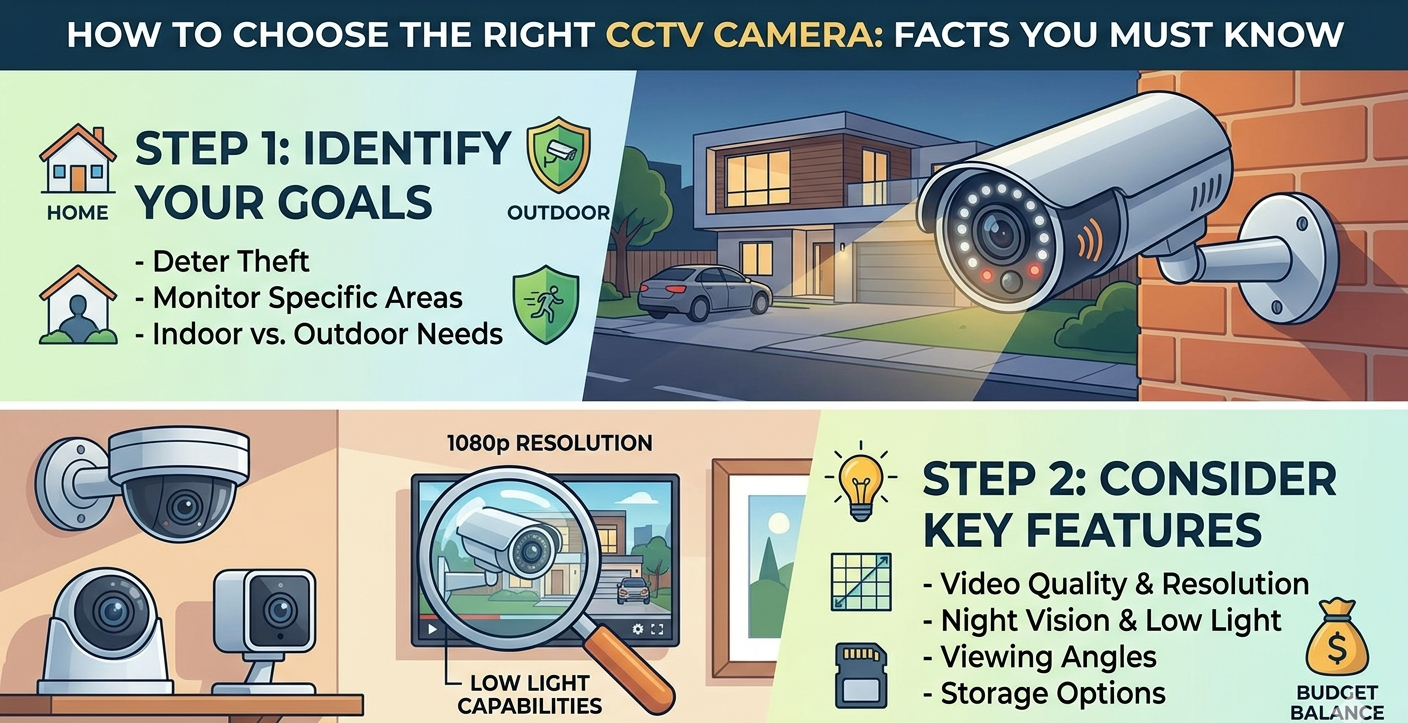
In an era where security threats are constantly evolving, installing a reliable CCTV camera system has become essential for both residential and commercial spaces. Whether you want to protect your home, monitor your office, or secure a large industrial facility, choosing the right CCTV camera plays a critical role in ensuring safety and peace of mind.
However, with countless options available in the market each offering different features, technologies, and specifications it can be overwhelming to decide which camera is best suited for your needs. This comprehensive guide will walk you through all the important factors and facts you must know before making the right choice.
1. Identify Your Security Purpose Clearly
The first and most important step is to understand why you need a CCTV camera. Your purpose will directly influence the type of camera you should choose.
Ask yourself:- Do you want to prevent theft or monitor daily activities?
- Are you securing a home, office, shop, or industrial site?
- Do you need 24/7 surveillance or only during specific hours?
For example, a retail store may require continuous monitoring with multiple cameras, while a home home might only need basic entry-point coverage. Defining your goal helps in selecting the right system without unnecessary expenses.
2. Know the Different Types of CCTV Cameras
Understanding camera types is crucial for making an informed decision. Each type is designed for specific environments and purposes:
- Dome Cameras Compact and discreet, ideal for indoor surveillance in offices, homes, and retail stores.
- Bullet Cameras Long and cylindrical, perfect for outdoor use with extended viewing range.
- PTZ Cameras (Pan-Tilt-Zoom) Advanced cameras that can move and zoom, suitable for large areas like warehouses or parking lots.
- IP Cameras (Internet Protocol Cameras) Offer high-quality video and remote access via internet connectivity.
- Wireless Cameras Easy to install and flexible, best for locations where wiring is difficult.
Choosing the correct type ensures maximum efficiency and coverage.
3. Indoaor vs Outdoor Cameras: Choose Wisely
One of the most common mistakes people make is using the wrong camera for the wrong environment.
- Indoor Cameras Designed for controlled environments, lightweight, and aesthetically pleasing.
- Outdoor Cameras Built to withstand harsh weather conditions such as rain, dust, and heat..
Always check the IP (Ingress Protection) rating of outdoor cameras. A higher rating means better protection against environmental factors.
4. Camera Resolution and Image Quality
When it comes to CCTV cameras, clarity is everything. The ability to clearly identify faces, license plates, or suspicious activity depends on the camera’s resolution.
Common resolutions include:- 720p – Basic quality
- 1080p – Full HD (recommended minimum)
- 2MP to 8MP – High-definition and ultra-clear footage
Higher resolution cameras provide sharper images but also require more storage space. For most applications, 1080p or higher offers a good balance between quality and cost.
5. Field of View and Coverage Area
Another important factor is how much area a camera can cover. This is determined by the camera’s lens and field of view (FOV).
- Wide-angle lenses cover larger areas but with less detail
- Narrow-angle lenses focus on specific spots with higher detail For example:
- Use wide-angle cameras for halls or parking areas
- Use narrow-angle cameras for entrances or cash counters
Strategic placement ensures there are no blind spots in your surveillance system
6. Importance of Night Vision and Low-Light Performance
Most security incidents occur during nighttime or in low-light conditions. That’s why night vision is a must-have feature.
Key features to look for:- Infrared (IR) LEDs for black-and-white night footage
- Color night vision for enhanced visibility
- Low-light sensors for better performance in dim conditions
A good CCTV camera should provide clear footage even in complete darkness.
7. Storage Options: Local vs Cloud
Storage is an essential part of any CCTV system. You need a reliable way to store and access recorded footage.
Local Storage- Uses DVR (Digital Video Recorder) or NVR (Network Video Recorder)
- Stores data on hard drives
- One-time investment
- Stores footage online
- Accessible from anywhere
- Requires subscription
For maximum security, many users prefer a hybrid system that combines both options.
8. Smart Features and Remote Monitoring
Modern CCTV systems are equipped with advanced smart features that enhance usability and security:
- Live viewing via mobile apps
- Motion detection alerts
- Facial recognition (in advanced systems)
- Two-way audio communication
- Remote access from anywhere
These features allow you to stay connected to your property even when you are away.
9. Installation and Camera Placement Strategy
Even the best CCTV camera won’t perform effectively if installed incorrectly. Proper installation is key to maximizing performance.
Best practices include:- Install cameras at entry and exit points
- Cover high-risk areas like parking lots and storage rooms
- Avoid direct sunlight or reflective surfaces
- Mount cameras at a safe height to prevent tampering
Professional installation ensures optimal coverage and long-term reliability.
10. Budget Planning and Scalability
Budget plays a significant role in choosing the right CCTV system. However, it’s important not to compromise on quality for the sake of saving money.
Consider:- Initial cost of cameras and installation
- Maintenance and upgrade costs
- Future expansion needs
Choose a system that can be easily upgraded as your security needs grow.
11. Legal and Privacy Considerations
While installing CCTV cameras, it’s important to follow local laws and respect privacy.- Avoid placing cameras in private areas like restrooms
- Inform employees or visitors about surveillance
- Ensure data is stored securely
Responsible usage of CCTV systems builds trust and avoids legal issues.
Conclusion
Choosing the right CCTV camera is a crucial step in ensuring the safety and security of your property. It’s not just about buying a camera, it's about selecting the right combination of technology, features, and placement that meets your specific needs.
From understanding different camera types and resolutions to evaluating storage options and smart features, every factor plays a vital role in building an effective surveillance system. A well-planned CCTV setup not only helps in preventing crimes but also provides valuable evidence when needed.
At D’Park Corporation , we are committed to delivering advanced, reliable, and customized CCTV and security solutions across India. With our expertise and cutting-edge technology, we help you choose the right system to protect what matters most.